
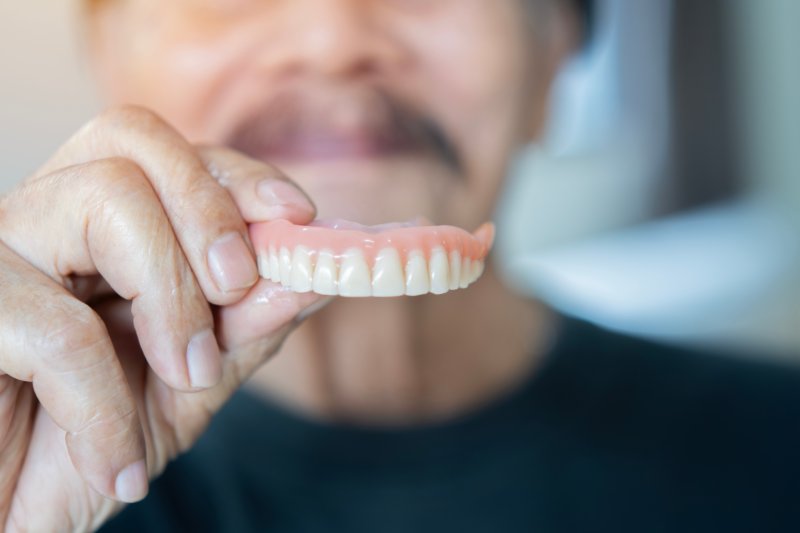
Wearing dentures can give you the confidence you need to pursue new ventures, personally and professionally. However, when you first receive your teeth, you may notice changes to how you eat, the way you speak, and more. This adjustment phase is normal and should not last long. But to help you remain comfortable with this reality, your dentist can provide some tips to make the first month a breeze.
What Kind of Adjustments Should You Expect?
When you first receive your dentures, you may think you can begin using them without issue. The reality is that your mouth needs time to adjust to the foreign object inside your mouth. This typically takes 30 days, according to dentists.
During the first month, it’s common to experience:
- A slight lisp while you talk
- Difficulty eating certain foods
- Increased saliva production
- Sore spots on your gums
What Tips Can You Use to Make the Adjustment Phase Easier?
Once dentures are fitted and seated in your mouth, you may become frustrated by the challenges you initially face. Fortunately, your dentist can provide helpful tips to make these 30 days easier.
As you prepare for post-treatment denture wear, consider the following:
- Discomfort is likely to occur, so feel free to take an over-the-counter pain reliever to alleviate soreness. Your dentist may need to make a few adjustments to their fit, especially as the swelling of your gum tissues begins to dissipate.
- Eat softer foods initially so that you don’t place additional pressure on your gums and bone. Mashed potatoes, yogurt, pudding, and other similar foods are ideal. Consuming denser foods requires you to eat with both sides of your mouth so that your dentures don’t pop up or slip out of place.
- Cut up your food into smaller bites so that you can chew easily with your back teeth.
- Stay away from certain foods, like hard candy, popcorn, caramels, and even ice. These can damage your dentures and cause them to become loose during mealtime.
- Speak slowly if you develop a slight lisp. You can also read aloud from a book and practice harder words and sounds when you’re alone.
The more you adhere to these tips, the closer you will get to wearing dentures without the struggle to eat, speak, and smile.
About the Author
Dr. Robert De Rosso earned his dental degree from Tufts University School of Dental Medicine in 1994. Since then, he has completed numerous hours of continuing education across various areas of dentistry. Offering customized dentures to patients seeking to restore their smiles, he explains post-treatment adjustments so individuals are not surprised. Contact us via our website or call (908) 689-8887 to schedule a consultation and learn more about dentures.